
The New Rules of Intermittent Fasting: Fat Loss and Muscle Growth in 2026
You might have noticed that the conversation around weight loss and intermittent fasting has shifted recently. Some prominent health experts who once championed long fasts are now pulling back, expressing concerns about muscle loss and metabolic stress. It can feel confusing when the goalposts seem to move just as you are getting into a routine. We have good news: the latest research actually makes fasting easier and more effective than before. We just need to learn how to toggle between stress and recovery.
Quick Answer: Modern intermittent fasting focuses on “burst fasting,” which involves three to five days of fasting followed by several days of normal eating to prevent metabolic slowdown. To maximize fat loss while preserving muscle, aim for an 18 hour fasting window and prioritize resistance training while in a fasted state.
What is burst fasting and why should you try it?
In the past, many of us followed a strict daily schedule like 16:8, where we fasted for 16 hours every single day. The problem is that your body eventually adapts to this. If you constantly skip breakfast and lower your calories, that lower intake becomes your new normal. We need a catalyst for change. Fat loss often requires a healthy shock to the system.
Burst fasting is our preferred method now. Instead of fasting every day, we suggest doing three to five days of intermittent fasting in a row. After that, you take three to five days off. This approach prevents you from becoming psychologically addicted to the “light” feeling of fasting while ensuring your metabolism stays fast. It also gives your body a much needed chance to recover and keep calories higher on your off days.1
Why is 18:6 the new standard for fat loss?
For a long time, the 16:8 method was the “Hollywood” version of fasting. You skip breakfast, forget to eat for a few hours, and you are done. However, we now know that something significant happens around the 16 hour mark. This is when the body truly begins to tap into stored resources through processes like gluconeogenesis and increased fat burning.2
By extending your fast to 18 hours, you move past the introductory phase and into deeper lipolysis. If 16 hours is the minimum, 18 hours is the “sweet spot” where your body starts liberating more fat for energy. If you want to be more aggressive, you can consolidate these 18 hour fasts into a few days a week and skip dinner instead of breakfast. This puts you in a deeper fasted state when you wake up, making your morning workouts incredibly effective for burning through storage.
How do we build muscle while fasting?
One of the biggest criticisms of fasting from experts like Dr. Peter Attia is the potential for muscle loss. But we can avoid this by flipping the script. Many people make the mistake of doing only cardio while fasting and lifting weights only after they eat. We recommend the opposite.
If fat loss is your goal, perform 30 to 40 minutes of resistance training during your fasting window. This provides the stimulus your muscles need to stay put. Muscle protein synthesis is driven primarily by resistance training: if you use the muscle, your body is much less likely to break it down for energy. Save your cardio for the days you are actually eating. Cardio can be catabolic in the short term, so doing it on a day when you are already in a calorie deficit is unnecessary stress.3
Which supplements actually boost fasting results?
The supplement world has evolved, and we have found a few key tools that make the fasted state more productive. Some of these might surprise you because they help with both the physical and mental sides of the fast.
- Creatine: Many people think this is only for bodybuilders, but using 5 to 15 grams on a fasting day is a game changer. It keeps your brain sharp, keeps your muscles looking full, and helps with cellular hydration.
- Yohimbine and Rauwolscine: These act as Alpha 2 adrenergic receptor agonists. In simple terms, they block the process that prevents fat from being released. They help liberate fat so it can be burned for fuel.4
- TMG (Trimethylglycine): This is a methyl donor that helps lower inflammation and supports both fat burning and muscle building.
How should you break your fast for maximum recovery?
When it is time to eat, your first priority is protein. We recommend 20 to 30 grams of a lean protein right away. Wait about 30 to 60 minutes before introducing fats. As for carbohydrates, we suggest saving them for the evening. There is little evidence that timing your carbs perfectly with your workout matters for most people. What matters is that your glycogen stores are full by the end of the day. Eating carbs at night can actually help you sleep better by assisting tryptophan in reaching your brain.
When is it time to stop fasting?
The most important lesson we have learned is that you must be in control of your schedule. Fasting is a stressor. In scientific terms, we look at your “allosteric load,” which is the total amount of stress on your body at any given time. If you are dealing with a stressful event like a job loss or a family argument, do not fast.5
Fasting pushes you into a sympathetic, or “fight or flight,” state. We want to use that stress to burn fat, but we also need to know when to switch to the parasympathetic, or “rest and digest,” state for recovery. If your life is already too stressful, adding a fast can lead to burnout and muscle loss. Be kind to yourself and skip the fast on those days. You can always go back to it when things calm down.
Sources and References
- Dr. Rhonda Patrick on Fasting Stress and Longevity
- Dr. Peter Attia on Muscle Preservation and Fasting
- Research on 18:6 vs 16:8 Metabolic Benefits
- Dr. Layne Norton on Protein Synthesis and Resistance Training
- Dr. Benjamin Bikman on Insulin and Fasting States
Bonus:
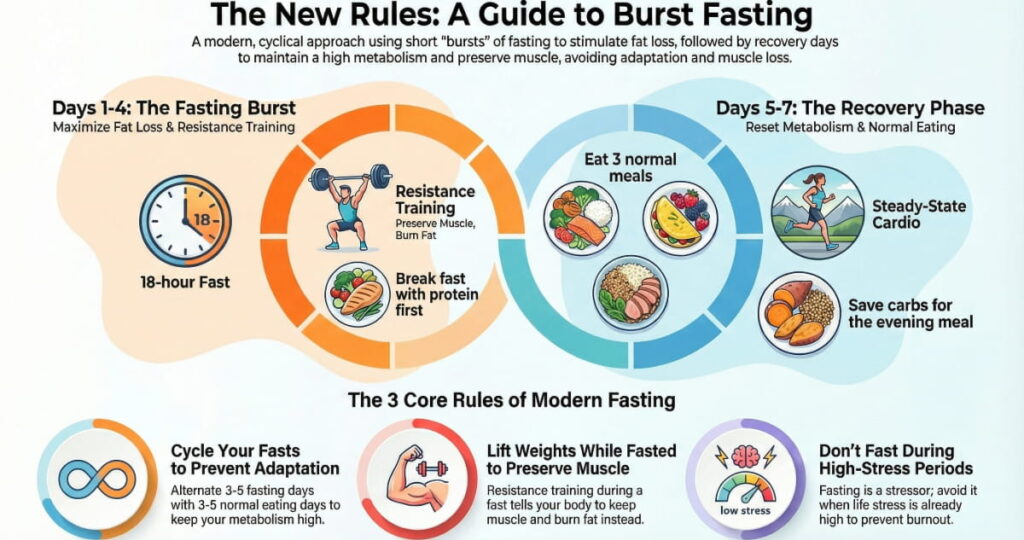
A Seven Day Burst Fasting Plan: Balancing Stress and Recovery
Following the new science of intermittent fasting requires a shift in how you view your weekly schedule. We are moving away from the rigid: daily 16:8 routine and toward a more dynamic: “Burst Fasting” cycle. This seven day plan is designed to shock your metabolism into fat loss during the first four days and then prioritize muscle recovery and hormonal balance for the final three days. This approach ensures you never hit a plateau or feel burnt out.
Quick Answer: This seven day plan uses a four day “fasting burst” with 18:6 windows and resistance training: followed by a three day recovery phase with regular eating and cardio. Break every fast with 20 to 30 grams of lean protein and save your carbohydrates for the final meal of the day to support deep sleep and muscle glycogen.
How should you structure your four day fasting burst?
During these first four days: your goal is to maximize fat liberation and maintain muscle stimulus. You will follow an 18:6 schedule: which means if you finish dinner at 8:00 PM: you will not eat again until 2:00 PM the next day. We recommend performing your resistance training in the morning or early afternoon while still in the fasted state to keep muscle protein synthesis high.1
Day 1 to Day 4: The Fasting Protocol
- 18 Hour Fast: Water: black coffee: yerba mate: or plain tea only.
- Workout: 30 to 40 minutes of resistance training (Lifting weights or bodyweight exercises).
- Break-Fast (2:00 PM): 20 to 30 grams of lean protein. Examples: whey protein isolate: grilled chicken breast: or egg whites. Avoid fats and carbs here.
- Second Meal (3:30 PM): High protein and healthy fats. Examples: A large salad with salmon: avocado: and olive oil. Or a grass fed beef bowl with spinach and walnuts.
- Dinner (7:30 PM): Protein: fats: and your daily carbohydrate portion. Examples: Steak with a medium sweet potato or white rice and steamed broccoli.
What happens during the three day recovery phase?
On days five: six: and seven: we stop fasting. This is crucial for your thyroid health and to prevent your metabolism from slowing down. We want your body to feel safe and well fed so it continues to burn energy at a high rate. You can eat breakfast and spread your meals throughout the day. This is also the time to perform your aerobic work or zone two cardio.2
Day 5 to Day 7: The Recovery Protocol
- Breakfast (8:00 AM): Balanced meal with protein and healthy fats. Examples: Whole eggs with avocado and a small portion of berries.
- Lunch (12:30 PM): High protein and fiber. Examples: Turkey wrap (using a lettuce wrap) or a chicken and quinoa bowl.
- Workout: 30 to 45 minutes of steady state cardio (Walking: jogging: or cycling).
- Dinner (7:00 PM): Moderate protein and higher carbohydrates. Examples: Pasta with lean ground beef or a large serving of sushi with sashimi.
- Nighttime Routine: Consider your relaxation supplements: such as magnesium glycinate or theanine: to tilt your body into the parasympathetic state.
Why are carbohydrates saved for the evening?
You might wonder why we keep the carbs at the end of the day: especially on fasting days. When you eat carbohydrates: your body releases insulin. While insulin is often viewed as a “storage” hormone: it also helps transport the amino acid tryptophan into your brain. Tryptophan is a precursor to serotonin and melatonin: which are the chemicals responsible for relaxation and sleep. By eating your sweet potatoes or rice at night: you are essentially setting the stage for a better night of recovery.3
Can you adjust this plan for muscle growth?
If your primary goal is building lean mass rather than maximum fat loss: we suggest increasing the calories during your eating windows. You can also add five grams of creatine to your water bottle during your fasting hours on days one through four. This will keep your muscle cells hydrated and provide the energy needed for your heavy lifting sessions without breaking your fast. Remember that protein and stimulus are the two most important factors for keeping your muscle while the fat melts away.4
Sources and References
- The Effects of Intermittent Fasting on Body Composition and Metabolism
- Nutrient Timing and Its Effects on Recovery and Sleep Quality
- Comprehensive Research on Fasting and Hormonal Balance
- International Society of Sports Nutrition Position Stand on Nutrient Timing
Disclaimer: The content in this playlist is for informational and educational purposes only. Fasting is a powerful biological tool. Always consult with your healthcare professional before beginning a new fasting protocol, especially if you have a pre-existing medical condition or are taking medication.