
Natural Prostate Help: The Ultimate Guide to Shrinking Your Prostate with Food
Living with an enlarged prostate can feel like a constant battle with your own body. You might find yourself waking up multiple times a night or constantly scanning for the nearest restroom.
As a nutritionist with two decades of experience at places like the Cleveland Clinic, I have seen thousands of men reclaim their health. The secret often lies in what you put on your plate rather than just what you find in a pill bottle.
Many of my patients come to me looking for natural prostate help because they want to avoid the side effects of heavy medications. I have found that a targeted nutritional approach can produce truly remarkable results for the long term.
In this guide, we will explore the most potent foods and lifestyle changes to help you shrink your prostate. We will look at the science behind why these choices work and how to easily add them to your daily routine.
Understanding the Root Cause of Prostate Growth
Before we dive into the foods, it is helpful to understand why the prostate grows in the first place. For most men, it is not a random occurrence but a response to hormonal shifts.
As men age, the balance between testosterone and other hormones like estrogen or DHT begins to shift. This hormonal environment acts like fertilizer for prostate cells, causing them to multiply and swell.
Inflammation also plays a massive role in this process. When your body is in a state of chronic inflammation, the prostate gland often bears the brunt of that stress.
By focusing on specific nutrients, we can actually “turn off” the signals that tell the prostate to keep growing. This is the foundation of the natural prostate help I provide to my patients every day.
1. Pumpkin Seeds: The Zinc Powerhouse
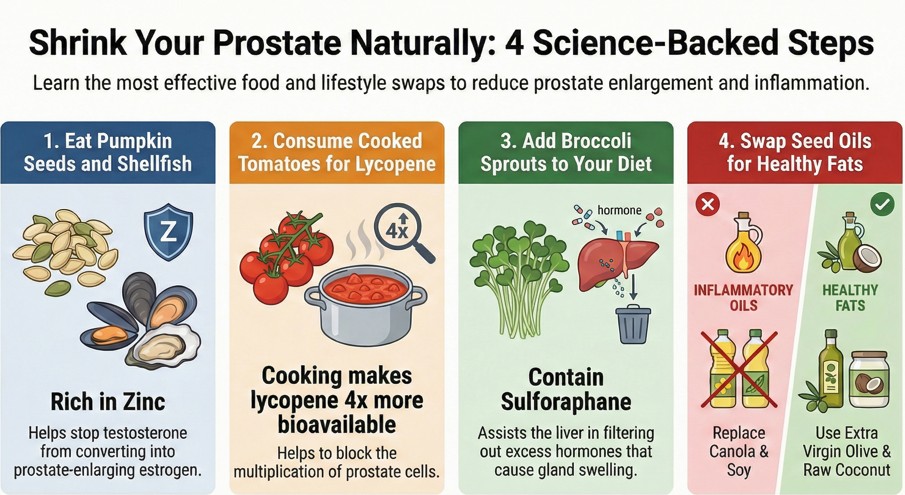
One of the most effective tools in my nutritional arsenal is the humble pumpkin seed. These small seeds are packed with a specific combination of zinc and phytosterols.
Zinc is absolutely essential for a healthy prostate because the gland contains the highest concentration of zinc in the entire male body. When zinc levels drop, the prostate becomes vulnerable to swelling.
Pumpkin seeds also contain compounds that inhibit the enzymes called aromatase and 5-alpha reductase. These enzymes are responsible for converting your healthy testosterone into forms that cause growth.
I recommend starting with a small handful of organic pumpkin seeds at least three times every week. This simple habit can help lower inflammation and fix the hormonal problem at its source.
A 2020 review on Pumpkin seeds.
2. Broccoli Sprouts and the Power of Sulforaphane
Cruciferous vegetables are well known for their health benefits, but broccoli sprouts are in a league of their own. They are the richest source of a compound called sulforaphane.
Sulforaphane is a miracle worker for the liver. It helps your liver filter out excess estrogen, which is a major driver of prostate enlargement as men get older.
When your hormones are balanced, the prostate is under much less pressure to expand. Broccoli sprouts help balance your sex hormones along with your thyroid and adrenal systems.
I often suggest adding these tiny sprouts to your salads or sandwiches. They provide a massive dose of protection compared to eating regular full-grown broccoli alone.
3. Macadamia Nuts for Insulin Control
You might be surprised to see a nut on this list, but macadamia nuts play a very specific role in natural prostate help. They are key to managing your insulin levels.
Many men suffer from frequent snacking or diets high in refined sugars. This causes insulin levels to spike, which can lead to a swollen and inflamed prostate over time.
Macadamia nuts are full of healthy fats and phytosterols that help reduce your cravings for sugar. They give you sustained energy so you do not feel the need to snack between meals.
I suggest eating a small handful of these nuts at the very end of your meals. This helps stabilize your blood sugar and promotes a much healthier environment for your prostate gland.
4. Tomatoes: The Lycopene Miracle
Tomatoes are perhaps the most famous food for prostate health, and for very good reason. They are the richest natural source of a red pigment called lycopene.
Lycopene acts as a powerful antioxidant that concentrates directly in the prostate tissue. Scientific studies have shown it can actually block the multiplication of prostate cells.
There is a specific trick to getting the most out of your tomatoes. When you cook them, the lycopene becomes four times more bioavailable for your body to absorb.
I always tell my patients to enjoy cooked tomato sauces or roasted tomatoes rather than just raw ones. This ensures your prostate is getting the maximum dose of this protective nutrient.
Cleveland Clinic review
5. Extra Virgin Olive Oil and Healthy Fats
The type of oil you use in your kitchen can either heal or harm your prostate. Most common vegetable oils like canola, soy, or corn oil are highly inflammatory.
These processed oils trigger inflammation in the prostate gland and should be removed from your pantry immediately. Replacing them with extra virgin olive oil is a total game changer.
Real olive oil contains a compound called oleuropein. This specific nutrient helps protect your prostate cells from becoming damaged or even cancerous.
I recommend using high quality olive oil as your primary dressing for salads and vegetables. It helps balance your hormones and provides the healthy fats your body needs to thrive.
6. Raw Coconut Oil for Hormonal Balance
Another fantastic alternative to inflammatory seed oils is raw coconut oil. It is unique because it contains a concentrated version of lauric acid called monolaurin.
Medical studies have shown that the compounds in coconut oil can actually block the process of prostate enlargement. It is a very stable fat that works well for cooking.
Coconut oil also contains medium chain fats that support your overall metabolism. These fats have been shown to inhibit certain types of unhealthy cell growth throughout the body.
You can easily use coconut oil for sautéing or even add a small amount to your morning coffee. It has a high smoke point, making it safer for cooking than many other oils.
7. Oysters and Shellfish: The Mineral Source
We mentioned earlier that zinc is the king of prostate minerals. If you want the most concentrated source of zinc, look no further than oysters and shellfish.
Modern farming has depleted the soil of many trace minerals like zinc, selenium, and iodine. This is why many men are deficient in these critical nutrients without even knowing it.
Men with enlarged prostates are frequently found to have significant zinc deficiencies. Eating shellfish once or twice a week can help bridge this nutritional gap.
Whether you enjoy oysters, crab, muscles, or shrimp, these sea foods improve blood flow to the prostate. This allows the gland to receive the nutrients it needs to shrink and normalize.
8. Sauerkraut and the Gut-Prostate Connection
It might seem strange to think that your gut health affects your prostate, but the connection is very strong. As we age, our digestive juices can become weaker.
If you cannot digest your food properly, you cannot absorb the zinc or iron needed for prostate health. This is where fermented foods like sauerkraut come into play.
Probiotic rich foods like sauerkraut, kimchi, and pickles boost the friendly microbes in your gut. These microbes help you absorb nutrients and lower inflammation everywhere.
Sauerkraut is also a massive source of vitamin C. This helps protect your prostate gland from infections and long term cellular damage.
9. Wild Salmon and Omega-3 Fatty Acids
If you are dealing with an overactive bladder or a swollen prostate, you need more omega-3 fatty acids. Wild salmon is one of the premier sources of these anti-inflammatory fats.
Populations that eat a lot of fish have much lower rates of prostate issues. The fats in wild fish help cool down the fire of inflammation in the pelvic region.
I always advise my patients to avoid farmed fish, which can contain higher levels of toxins. Stick to wild caught salmon, sardines, or mackerel for the best results.
Eating fatty fish twice a week provides the structural fats your prostate needs to stay healthy. It is one of the most delicious ways to provide natural prostate help to your body.
10. Green Tea: The Ultimate Prostate Drink
When it comes to what you drink, green tea is the undisputed champion for your bladder and prostate. It contains a very special ingredient known as EGCG.
EGCG works by blocking the enzyme that converts testosterone into the growth-promoting hormone DHT. This helps stop the prostate from getting any bigger.
If you are not a fan of green tea, you can also try stinging nettle root tea or hibiscus tea. Both of these have shown excellent results for men with BPH.
It is equally important to stop drinking things that hurt your prostate. I suggest cutting back on coffee, soda, and sugary fruit juices, as these are highly inflammatory.
Essential Lifestyle Tips for a Healthy Prostate
While food is your foundation, your lifestyle habits can accelerate your progress. I have found that a few simple changes can make the diet even more effective.
First, try to have a large salad every single day. Focus on organic cruciferous vegetables like radish, kale, and cabbage to help your liver clear out excess hormones.
Second, consider adding High-Intensity Interval Training (HIIT) to your routine. Just ten minutes twice a week can improve your testosterone and burn off excess blood sugar.
Finally, it is vital to avoid dairy products like milk and cheese. These foods can often aggravate an enlarged prostate and make your symptoms feel much worse.
Focus on removing processed sugars and breads from your diet entirely. Replace them with the whole foods we have discussed to promote healthy seminal fluid and a smaller prostate.
A Simple Daily Plan for Success
I know that changing your diet can feel overwhelming at first. The best way to start is by making one or two changes every week until they become habits.
You might start by swapping your morning coffee for green tea. Then, you could add a handful of pumpkin seeds to your afternoon routine.
By the second week, you could try replacing your cooking oils with olive oil and coconut oil. These small steps add up to a massive difference in how you feel.
Most of my patients notice a significant improvement in their bathroom habits within just a few weeks of starting this protocol. Your body wants to heal if you give it the right tools.
FAQ: Natural Prostate Help
What is the best food to shrink the prostate quickly? While all the foods listed are beneficial, pumpkin seeds and tomatoes are often the most effective. Pumpkin seeds provide the zinc needed for hormonal balance, while cooked tomatoes provide lycopene to stop cell growth.
Can I drink coffee if I have an enlarged prostate? It is best to limit coffee because it can be inflammatory and irritate the bladder. Switching to green tea is a better choice because it contains EGCG, which helps block the hormones that cause growth.
How often should I eat fish for prostate health? I recommend eating wild-caught fatty fish like salmon or sardines at least two times per week. This provides enough omega-3 fatty acids to help lower inflammation in the prostate gland.
Does exercise really help with an enlarged prostate? Yes, especially HIIT. Short bursts of intense exercise help manage insulin and testosterone levels. It also helps reduce belly fat, which is where excess estrogen is often produced.
Are there foods I should completely avoid? You should strictly avoid inflammatory vegetable oils, processed sugars, and dairy products. These foods are known to aggravate the prostate and increase swelling.
Medical Disclaimer: The information in this article is for educational purposes only and does not constitute medical advice. Always consult with a qualified healthcare professional or your doctor before making significant changes to your diet, supplement routine, or exercise program, especially if you have an existing medical condition.
You might also be interested in this article.