
Mastering the Protein-to-Weight Ratio for Lasting Success
The landscape of weight health is changing faster than ever. With millions of people now using GLP-1 medications like semaglutide and tirzepatide, we are entering a new era of metabolic health.
However, losing weight is only half of the journey. The real challenge is ensuring that the weight you lose comes from fat, not from your hard earned muscle.
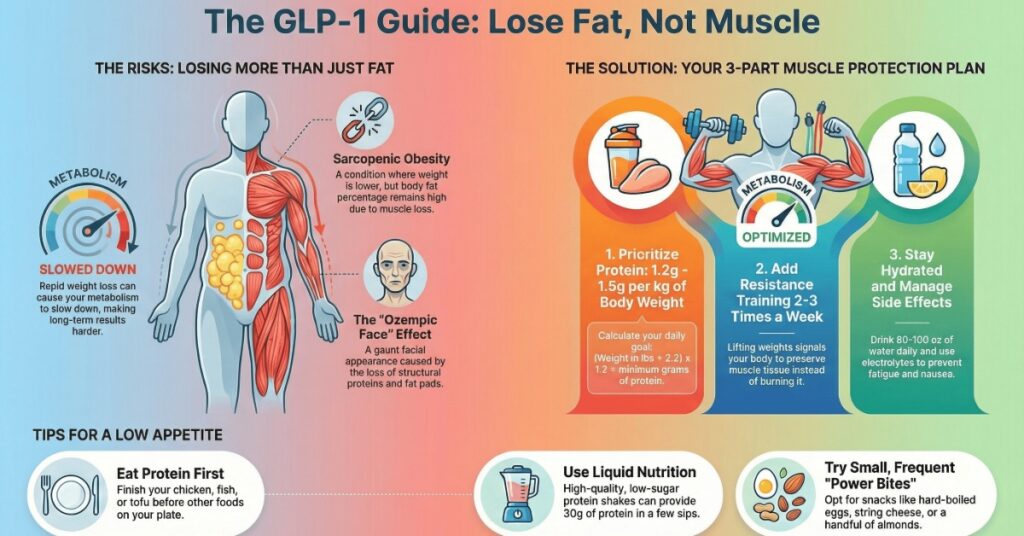
To prevent muscle wasting while taking GLP-1 medications, clinical experts suggest consuming a minimum of 1.2g to 1.5g of protein per kilogram of body weight daily. Adhering to this specific protein-to-weight ratio is the primary defense against sarcopenia and the sagging skin often associated with rapid weight loss.
We want you to feel strong, vibrant, and energetic, not just smaller. Here is how we can work together to protect your muscle and optimize your results.
Why Muscle Preservation is Your Top Priority
When you lose weight very quickly, your body often looks for the easiest source of energy. Unfortunately, that source is often muscle tissue.
If you lose a significant amount of muscle, you may experience something called sarcopenic obesity. This is a condition where your weight is lower, but your body fat percentage remains high because your muscle mass has disappeared.
Muscle is your metabolic engine. It burns more calories at rest than fat does. If you lose muscle, your metabolism slows down, making it much harder to maintain your results in the long term.
The Problem of “Ozempic Face”
You may have heard the term “Ozempic Face” in the news. This refers to a gaunt or aged appearance in the face after rapid weight loss.
This happens because of a loss of structural proteins and fat pads that give the face a youthful volume. By focusing on lean mass retention through high protein intake and proper hydration, we can help maintain that healthy glow and structural integrity.
Calculating Your Protein-to-Weight Ratio
Many people on GLP-1 medications find it difficult to eat enough because their appetite is suppressed. This makes the quality of every bite more important than ever.
We recommend aiming for at least 1.2 grams of protein for every kilogram you weigh. If you are physically active or lifting weights, you should aim closer to 1.5 grams.
- Step 1: Take your current weight in pounds.
- Step 2: Divide that number by 2.2 to get your weight in kilograms.
- Step 3: Multiply your kilograms by 1.2 or 1.5.
For example, if you weigh 200 pounds, that is approximately 91 kilograms. Your daily protein goal would be between 109 and 136 grams of protein.
How to Eat When You Have No Appetite
The irony of GLP-1 medications is that they make you feel full, yet your body needs specific nutrients to stay healthy. When your appetite is low, we need to use nutrient dense meal plans.
Prioritize Protein First
At every meal, eat your protein source first. If you get full halfway through your plate, we want to make sure the chicken, tofu, or fish was what you finished, rather than the rice or bread.
Use Liquid Nutrition
When solid food feels like too much, shakes can be a lifesaver. Look for high quality whey or pea protein isolates. Avoid shakes with high sugar content, as these can trigger nausea or blood sugar spikes.
Small, Frequent “Power Bites”
Instead of three large meals, try five small snacks. A hard boiled egg, a piece of string cheese, or a handful of almonds can provide a steady stream of amino acids to your muscles without overwhelming your stomach.
Micro-Biohacks for Nausea and Side Effects
GLP-1 side effect management is a major part of staying consistent. If you feel sick, you won’t eat, and if you don’t eat, you will lose muscle.
- Ginger Sequencing: Try chewing on a small piece of ginger or drinking ginger tea 30 minutes before you eat. This helps settle the stomach and prepares you for a protein rich meal.
- The Electrolyte Buffer: These medications can cause you to lose water and salt quickly. Drink electrolytes in the morning to prevent the headaches and fatigue that often mimic hunger or nausea.
- Cold Foods: Many users find that cold proteins, like chilled shrimp or Greek yogurt, are easier to tolerate than hot, aromatic foods when nausea is present.
The Missing Ingredient: Resistance Training
Protein is the building block, but your body needs a reason to keep the muscle. That reason is mechanical tension.
You do not need to become a bodybuilder. However, lifting weights or using resistance bands two to three times a week sends a signal to your brain. This signal says, “We are using these muscles, please do not burn them for energy.”
Without some form of resistance exercise, your body will naturally shed muscle during a caloric deficit. We want to avoid this at all costs.
Tracking Your Progress Beyond the Scale
When you are on a GLP-1 journey, the scale can be a liar. It doesn’t tell you if you lost five pounds of fat or five pounds of muscle.
We highly suggest using a body composition scale or getting a DEXA scan. These tools help you track your “Lean Body Mass.” If your weight is going down but your lean mass is staying steady, you are doing everything right.
A Sample Nutrient-Dense Day
Here is a simple way to structure your day for lean mass retention:
- Breakfast: Greek yogurt with a scoop of collagen powder and a few berries.
- Mid-Morning: A protein shake made with water or unsweetened almond milk.
- Lunch: 4 ounces of grilled chicken or tempeh over a small bed of greens.
- Afternoon Snack: Two hard boiled eggs with a pinch of sea salt.
- Dinner: 5 ounces of white fish or lean beef with steamed broccoli.
Final Thoughts
We are so proud of you for taking control of your metabolic health. These medications are incredible tools, but they work best when you support them with the right lifestyle.
By focusing on your protein-to-weight ratio, staying hydrated, and moving your body, you are ensuring that the “new you” is strong, healthy, and resilient. You are not just losing weight, you are gaining a better quality of life.
Always remember to consult with your healthcare provider before making major changes to your diet or exercise routine. We are here to support you every step of the way.
Disclaimer: The content in this playlist is for informational and educational purposes only. Fasting is a powerful biological tool. Always consult with your healthcare professional before beginning a new fasting protocol, especially if you have a pre-existing medical condition or are taking medication.